Thursday, August 30, 2012

Research Articles on SRI in India.... And Elsewhere


SRI-Rice at Cornell University has put together a bibliography of research articles about the System of Rice Intensification (SRI) in India. We have collected over 100 articles (nearly all from scientific journals)  from India that were published between 2004 and 2012. The chronological collection can be found on our SRI-rice website at  http://sri.ciifad.cornell.edu/countries/india/research/. Articles from India make up about a third of the 300+ SRI journal articles we have collected from around the world. (Unfortunately, less than 30 of these appear to be freely available to the public through the internet; the rest are locked up in subscription sites -- though happily the abstracts are generally available.  A red dot on a title indicates the free ones so that people won’t be frustrated by trying to open them.)

 In addition to the static chronological list of Indian SRI journal articles, these items are also available in our RefWorks India research database with  searchable metadata (including abstracts). (The RefWorks database site DOES have some non-journal items as well while the chronological list does not).

Worldwide Resources
In addition to the above resources on Indian research, we maintain a chronological  list of SRI research from all countries as well as a searchable global database (with abstracts and other metadata). Both of these are  accessible from the research section of our SRI-Rice website. (Remember to click on the “view button” to access complete metadata and the WorldCat button to find the nearest library that has the resource).

If you know of any articles that we have missed, don't hesitate to send us note at sririceATcornell.edu... or you can add them to the comments box below.....

Monday, April 23, 2012

EARTH DAY: Farmers Using the System of Rice Intensification are Doing Their Part

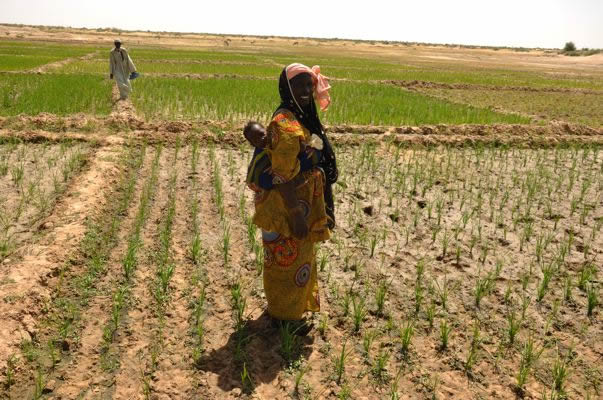
Using less water in MaliEarth Day, which falls on April 22 this year, is of course very relevant to SRI! Using less water, less agrochemicals, and less seed to get higher yields can help reduce the growing assault on the earth's resources and environment. The System of Rice Intensification also has a role to play in mitigating climate change by 1) reducing standing water (see photo at left), leading to decreased methane emissions; 2) reducing inorganic fertilizer use, leading to decreased carbon and nitrogen emissions from manufacture of fertilizers and their subsequent transportation over long distances; and 3) sustainable increases in the productivity of existing land, preventing the conversion of carbon sequestering forests to agricultural uses.

Harouna with SRI rice plant in MaliHowever, while SRI does help to protect the environment, using SRI methods also helps farmers to adapt to climate change: Stronger roots (as shown at right by Harouna in Timbuktu) help rice plants resist lodging in inclement weather, better withstand drought conditions, and, as indicated in recent reports from Sri Lanka, even help withstand flooding!  Since less water is required, more farmers can share the available water when increasingly unpredictable weather patterns cause water shortages. In fact, state governments in Tamil Nadu, Bihar, and elsewhere in India are currently promoting SRI, partly due to water savings with SRI.

Of course, benefits are not all related to climate change. Increased yields, another advantage of SRI, have been reported in 50 countries, and, in Kenya, Bancy Mati will soon release research results on how SRI water management breaks the mosquito breeding cycle and shows good prospects for malaria control.
 What's the secret to SRI success? Some of the answers can be found in our April 22  SRI-Rice Feature Article!

Friday, April 13, 2012

SRI RESEARCH: More Published Articles than You Might Think!


Although System of Rice Intensification (SRI) methods are now being used in at least 50 countries worldwide, there are still skeptics asking, "Where's the scientific proof that it really works?" For those who want a closer look at the science behind SRI, SRI-Rice at Cornell University has collected nearly 250 journal articles about SRI. And, we would like to share our bibliography with the global SRI community and others who would like to know what research is being done and what is being found.

See the April SRI-Rice Feature for information on accessing the SRI journal article citations and database. (Although many research articles are not free, the abstracts are available). There is still much research we haven't found. If you find something not included in our list, please send it out way: sririce@cornell.edu!

Friday, March 30, 2012

INDIA: SRI Concepts Applied to Direct-Seeded Rice in Andhra Pradesh

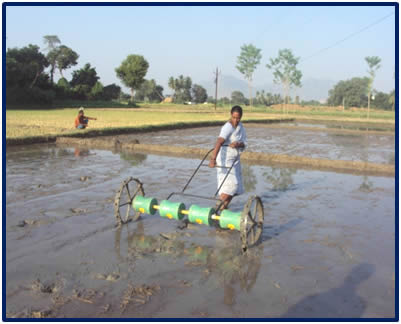
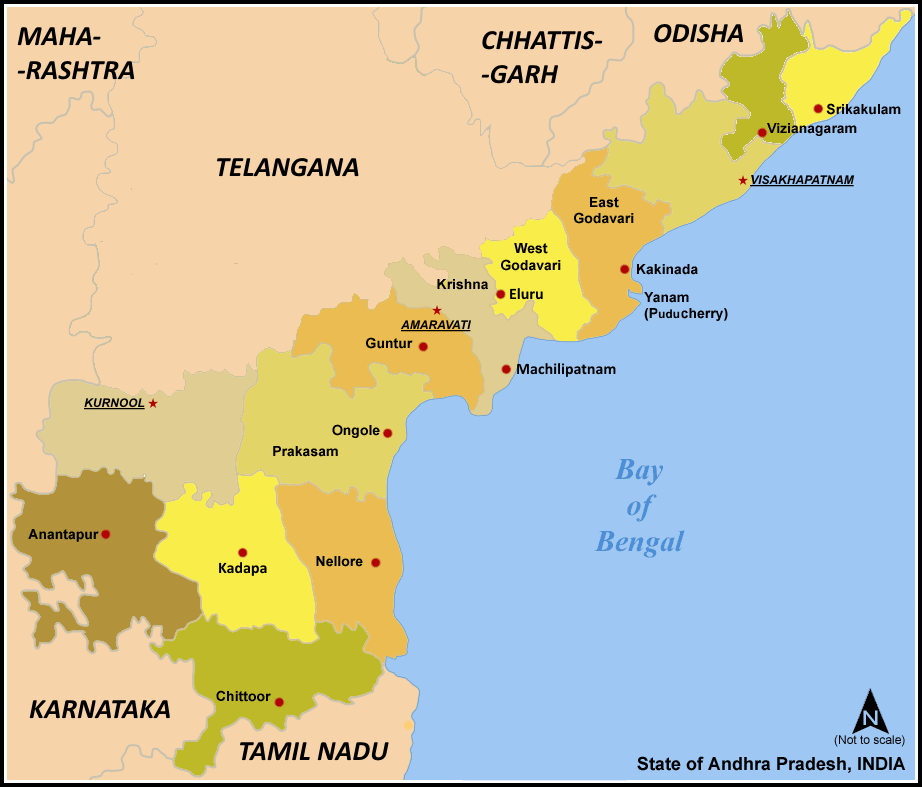
As an "open source" climate-smart innovation, the System of Rice Intensification (SRI) is intended to be modified by users.   While originally developed for transplanted, irrigated rice, SRI principles have been adapted to fit both farmer needs and the agroecosystem. One adaptation, which  involves direct-seeding rice with a drumseeder, is being promoted by the Rashiya Seva Samithi Acharya Ranga Krishi Vigyan Kendra (RASS-KVK) in Tirupati, Chittoor district, Andhra Pradesh, India.

RASS-KVK began experimenting with the drumseeder SRI adaptation for direct-seeding in 2006; by 2011, 658 farmers are using the method on 1,220 acres in Chittoor district.  Direct seeding with a lightweight drumseeder (shown at left) can reduce labor and time requirements through eliminating nursery-raising and transplanting, and results in a uniform plant population that matures earlier by 7-10 days. Comparison of the modified SRI method with traditional methods in Chittoor showed the average yield was higher (12%), cultivation costs were lower (by 25%), gross returns were greater (10%), and net returns were much higher (76%) with the direct-seeding.


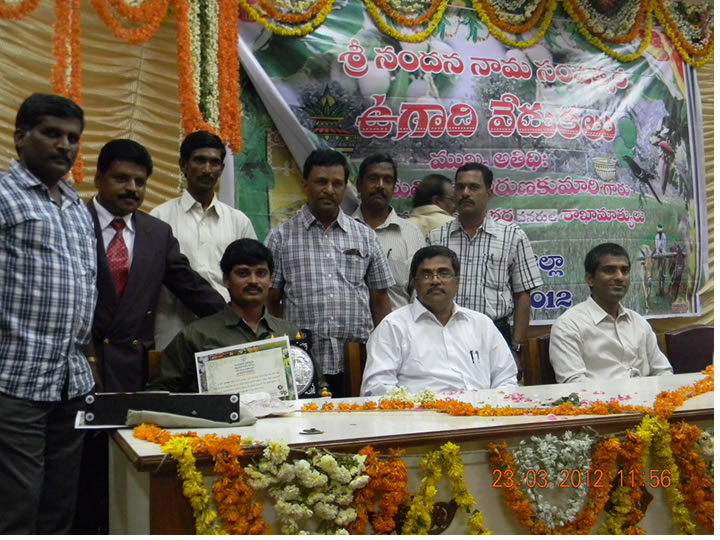
On February 23, 2012, Nageswar Rao (right) , the first person to adopt the modified SRI drumseeder method in his area, received the Best SRI Farmer Award for the Chittoor district of Andhra Pradesh. For more information on using the RASS-KVK direct seeding method, see the SRI-Rice feature article which includes videos and an updated report by P. Bala Hussain Reddy, S. Sreenivasulu and C. Manohar.